
Tryonixs Blog
Eyewear Virtual Try-On Software: The Complete Guide
Everything eyewear brands need to know about virtual try-on software - how it works, what it costs, how it cuts returns, and how to pick the right platform.
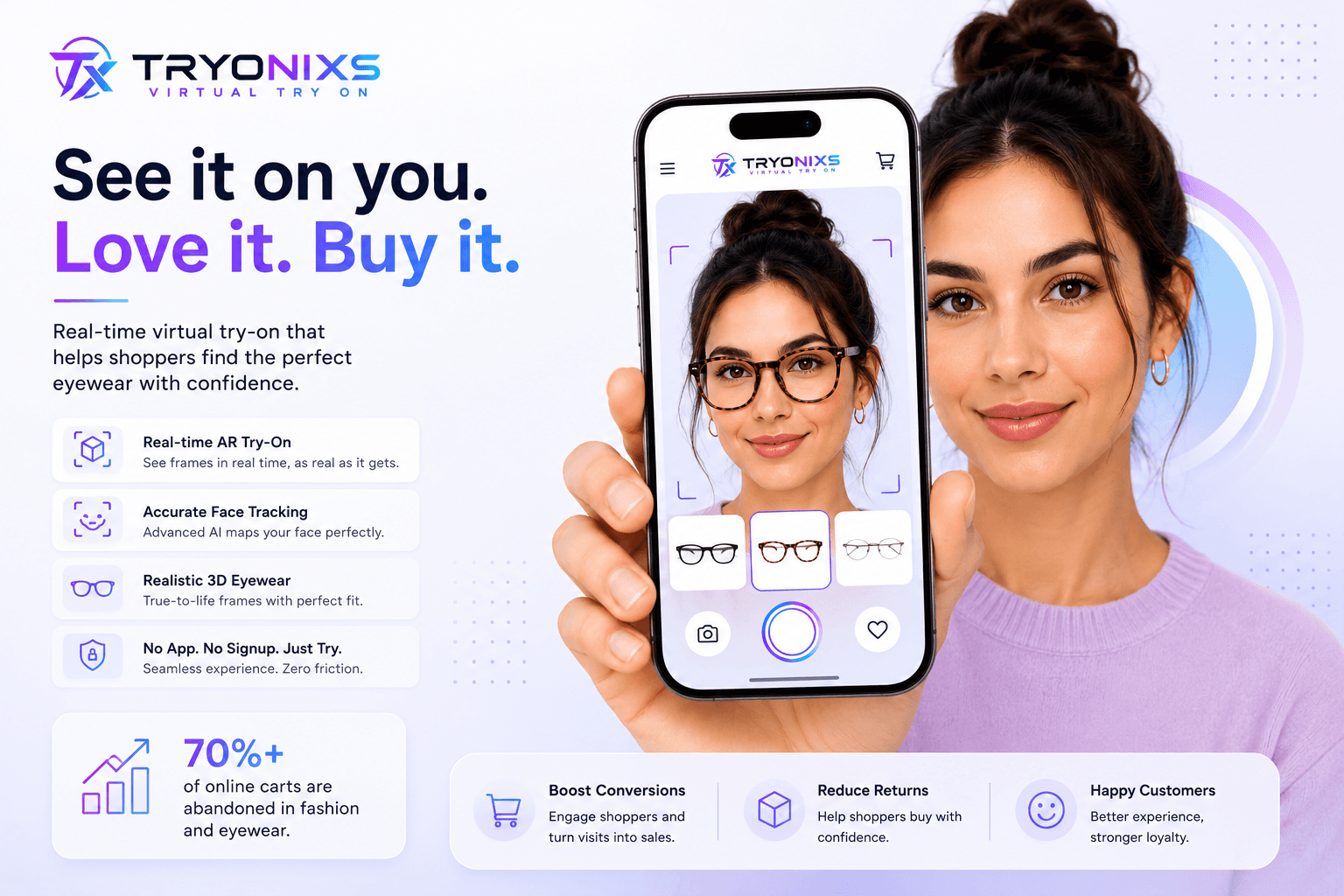
Eyewear virtual try-on software lets shoppers preview glasses on their own face in real time using a phone camera or webcam, combining facial landmark tracking with 2D or 3D frame rendering to reduce returns and increase conversion, with no app download required.
What Virtual Try-On Software Actually Is
Somewhere out there right now, someone's holding their phone an inch from their face, tilting it left, then right, trying to guess whether a $180 frame will actually suit them. If your store can't settle that question for them on the spot, you've probably lost the sale already. They're not going to email you a question. They're not "coming back later" either, whatever they type into that exit survey. They just close the tab and go buy from whoever let them see the glasses on their own face first.
That's the whole reason virtual try-on stopped being a fun add-on and turned into something eyewear brands basically have to have now. This guide covers what the tech actually is, roughly how it works, what it costs, what kind of return it generates in sales and fewer refunds, and how to pick a vendor that fits your store instead of forcing your store to bend around the vendor.
Consider this the hub page for eyewear virtual try-on. Related deep-dive topics get referenced throughout — face mapping and the AR pipeline, return-rate data, platform comparisons, and more — each destined for its own dedicated guide as that library gets built out.
Virtual try-on, or VTO for short, lets a shopper see a pair of glasses on their own face, live, before they hand over any money. Phone camera or laptop webcam, that's it. No app to download. No sample pair sitting in a courier truck for four days. No squinting at a flat product photo trying to mentally rotate it into 3D.
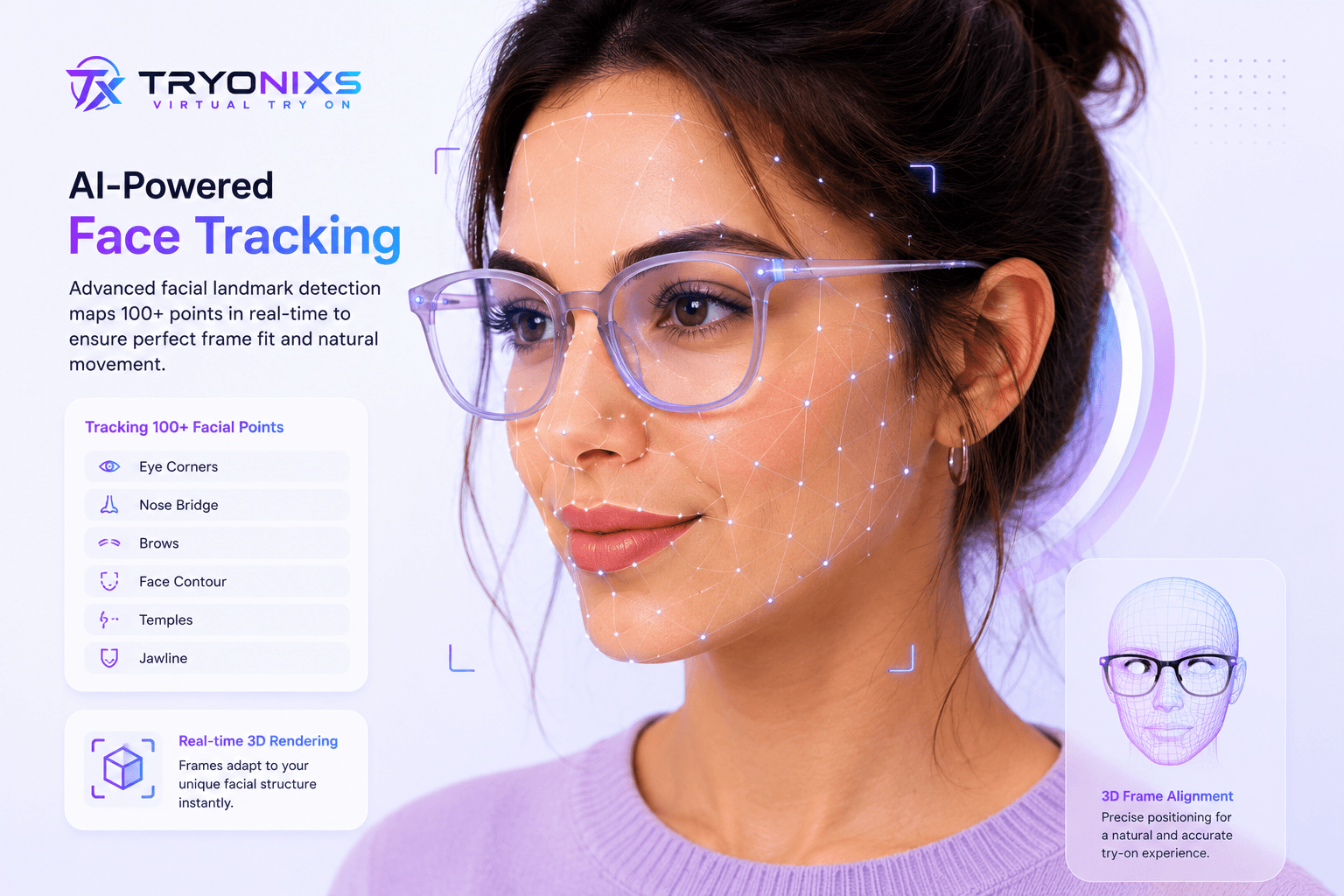
Under the hood you've got computer vision, facial landmark detection, and 3D rendering, all doing their job fast enough that it feels instant rather than laggy. The software finds a face, drops a few dozen reference points across it — eyes, brow line, nose bridge, temples — then overlays a 3D model of the frame so it scales and shifts the way real glasses would as the head moves.
The full technical breakdown of face mapping, tracking, and the AR rendering pipeline deserves its own guide — how virtual try-on for glasses actually works, end to end.
Why Eyewear Brands Are Moving On This So Fast
A handful of things are pushing this from a nice extra to something close to expected now.
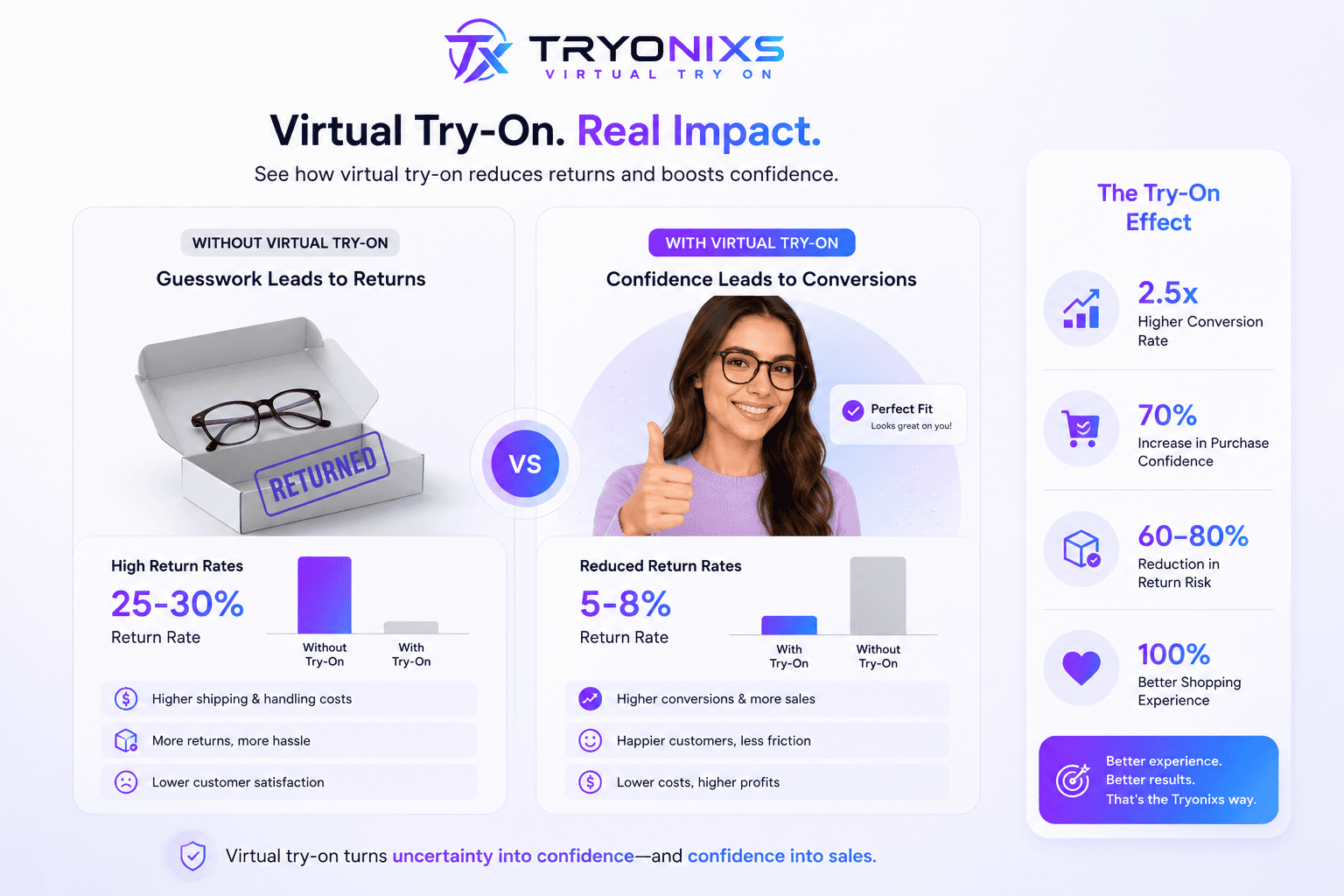
Returns in eyewear are brutal. Frames bought without a try-on come back far more often than frames someone tried first, mostly because a bad fit or face-shape mismatch is the number one reason glasses get sent back. Every return costs shipping twice, someone's time processing it, and often a frame that's now too scuffed up to resell.
Online shopping took the mirror away. Walk into an optician and you'll try twelve frames in ten minutes. Put those same twelve frames on a website as flat photos and the shopper is basically working blind, so either they bail on the cart or they order three pairs planning to return two, which isn't cheap either.
And conversion has turned into a numbers game at this point. Shoppers who use a try-on feature convert noticeably better than the ones who don't. That tracks — the tool answers their biggest hesitation before it turns into an abandoned cart.
Real return-rate numbers, before and after adding try-on, are worth tracking closely as more case studies come in from brands running this at scale.
What This Looks Like From the Shopper's Side
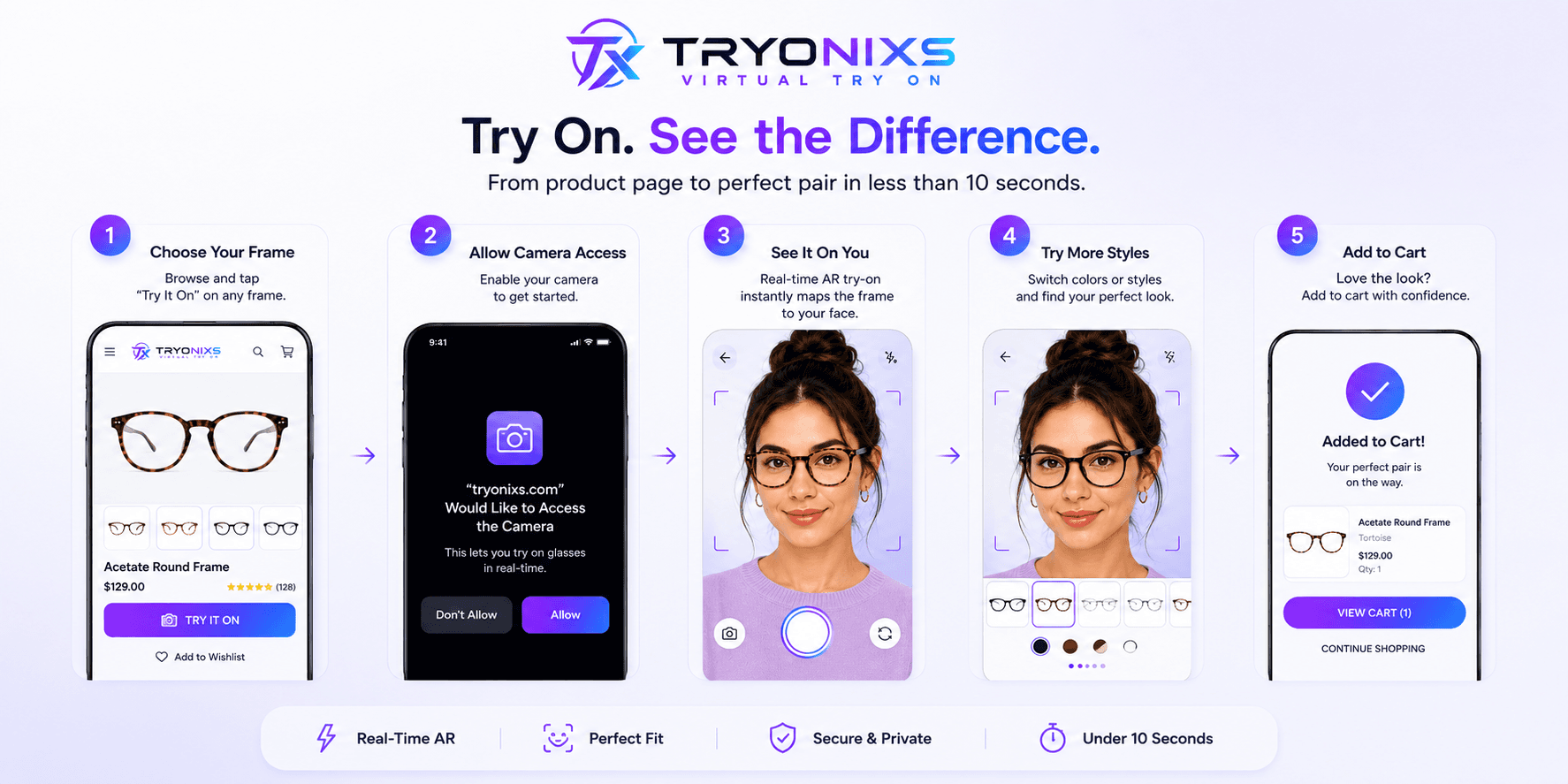
They land on a product page and tap Try It On. Camera opens, or they upload a photo if they'd rather. The frame lands on their face and tracks as they turn their head. They swap colors, try a different style, maybe put two frames side by side to compare. Then they add to cart, feeling sure of themselves instead of just guessing.
Every extra second of loading, every please-wait spinner, kills momentum right when you finally had their attention. That's why the implementation matters just as much as the AI underneath it. A brilliant rendering engine that takes four seconds to load a frame will still lose you the sale.
2D Overlay vs. 3D Rendering
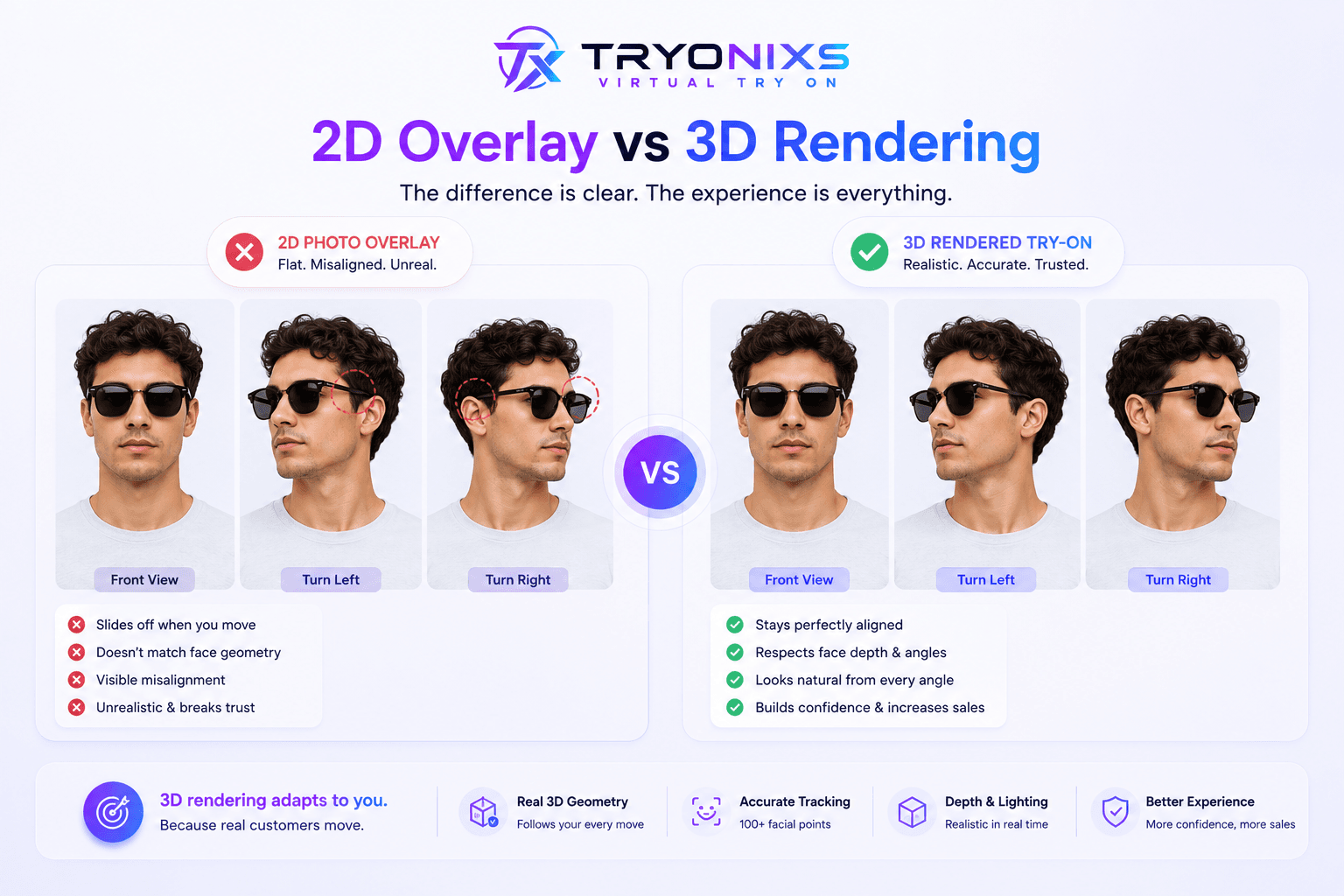
Not all virtual try-on gets built the same way, and the gap between the two approaches matters more than most buyers realize before they've already signed something.
2D photo overlay lays a flat image of the frame over a photo or video of the face. It's cheaper and faster to launch, but it falls apart the second someone turns their head. The frame won't rotate properly or sit right on the nose bridge, and it can start looking fake pretty quickly.
3D rendering uses an actual 3D model of the frame and renders it live against the tracked shape of the face. It handles head turns, lighting, and depth the way you'd actually expect. That's what makes it feel like a real try-on instead of a filter.
The catch is you need a 3D model for every SKU, which is a bigger production job than just photographing a frame. Cost, realism, and the actual conversion impact of each approach are worth comparing directly against your own catalog before choosing one over the other.
Accuracy Matters More Here Than in Any Other Try-On Category
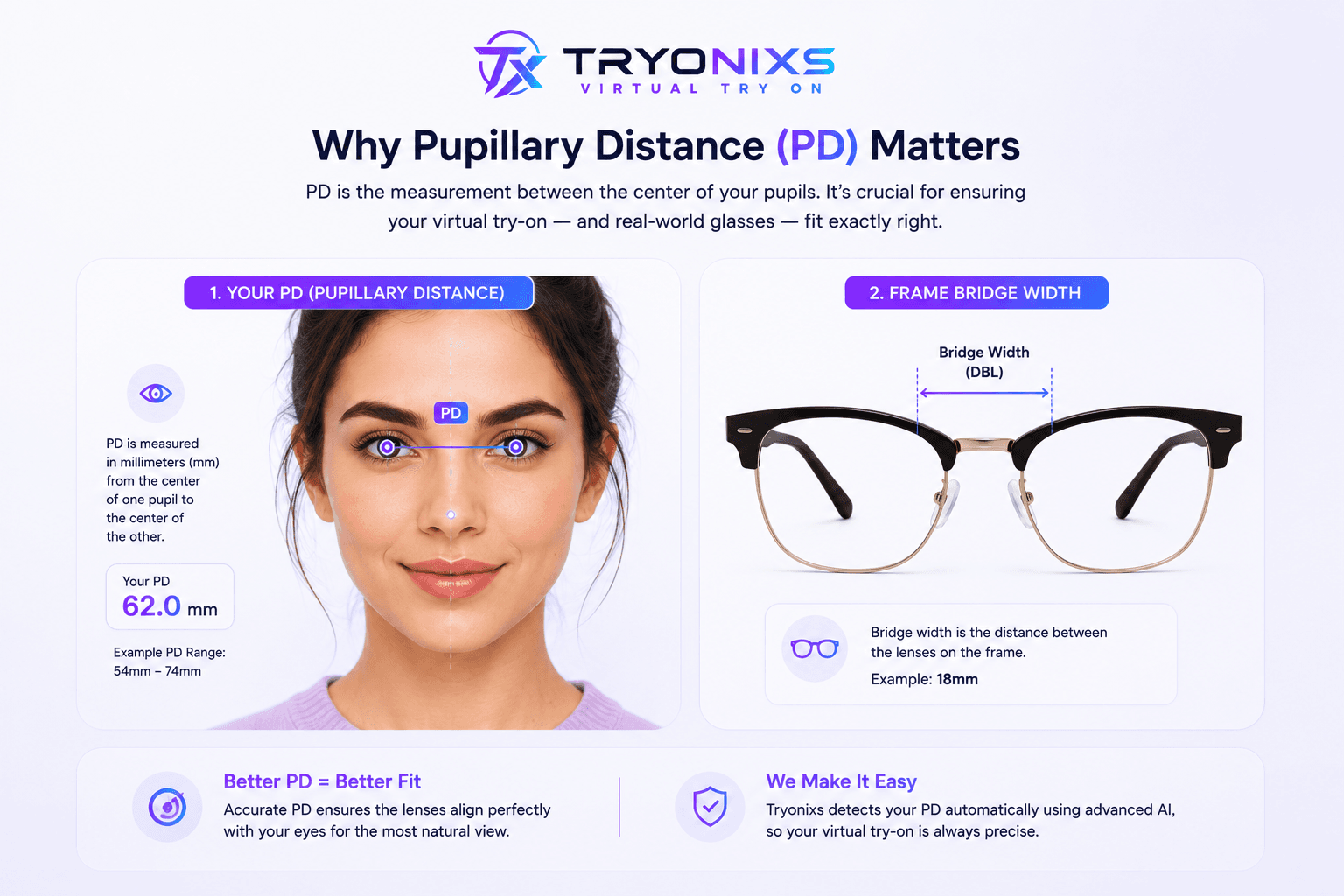
Virtual try-on exists for clothes, makeup, furniture, all of it. But eyewear has one constraint none of those other categories deal with: prescription accuracy. A frame that looks great in the try-on but doesn't actually match the customer's pupillary distance or bridge width is still getting returned, no matter how convincing the overlay was.
The vendors worth taking seriously pair the visual fit with real measurement data instead of leaning on a good-looking render alone. If you sell prescription eyewear, not just sunglasses or blue-light frames, this is basically the line between a gimmick and a tool that actually moves your return rate.
Face Shape Matching: The Feature Nobody Thinks to Ask About
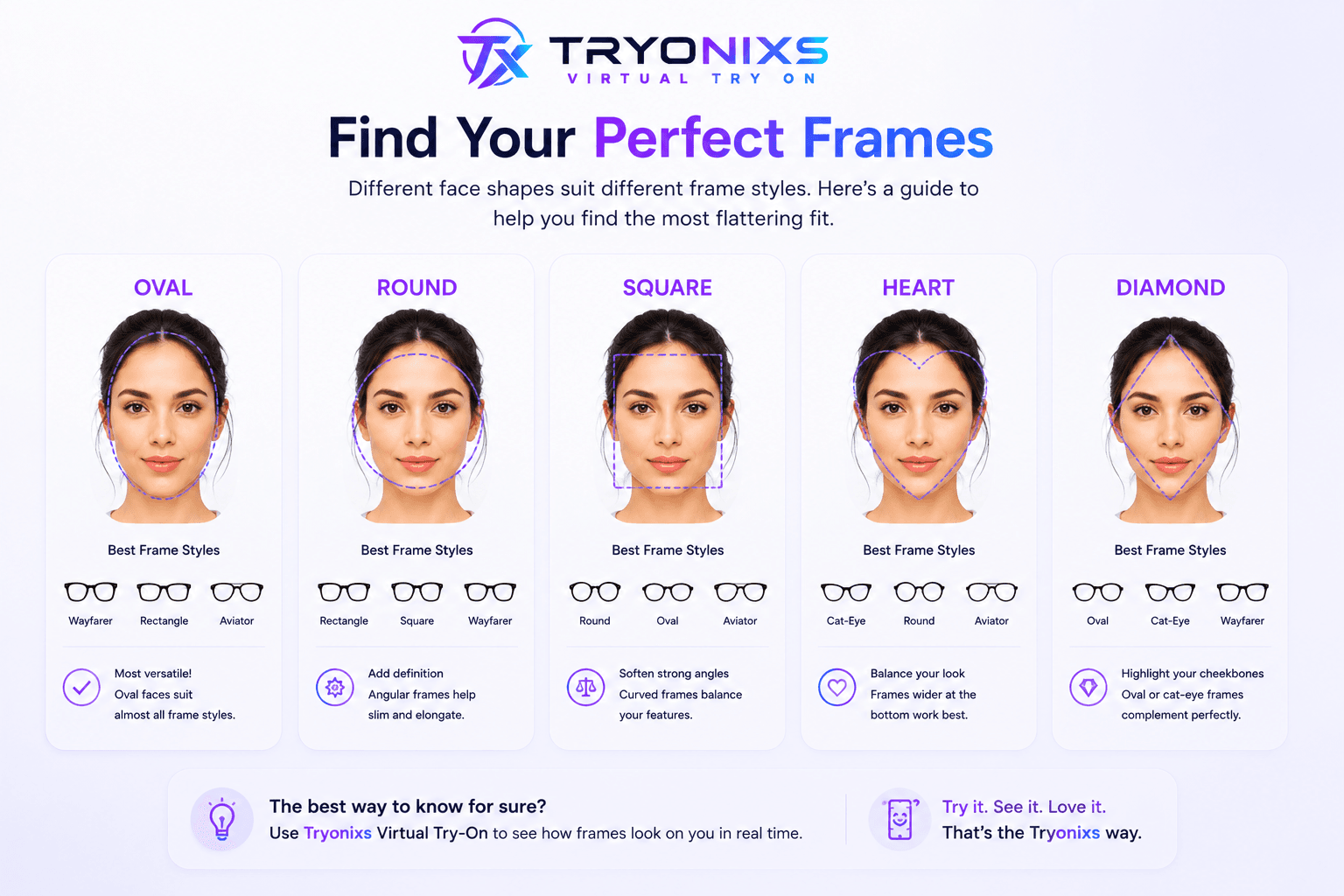
The better tools don't stop at showing a frame on a face. They help the shopper figure out which frame to even try in the first place. AI face-shape detection — oval, round, square, heart, diamond — can suggest styles that tend to suit that shape, turning a passive try-on widget into something closer to an actual styling assistant.
That's a real line between a basic AR plugin and something actually built for eyewear specifically.
In-Store Try-On Isn't Dead, It's Just Merging With Online
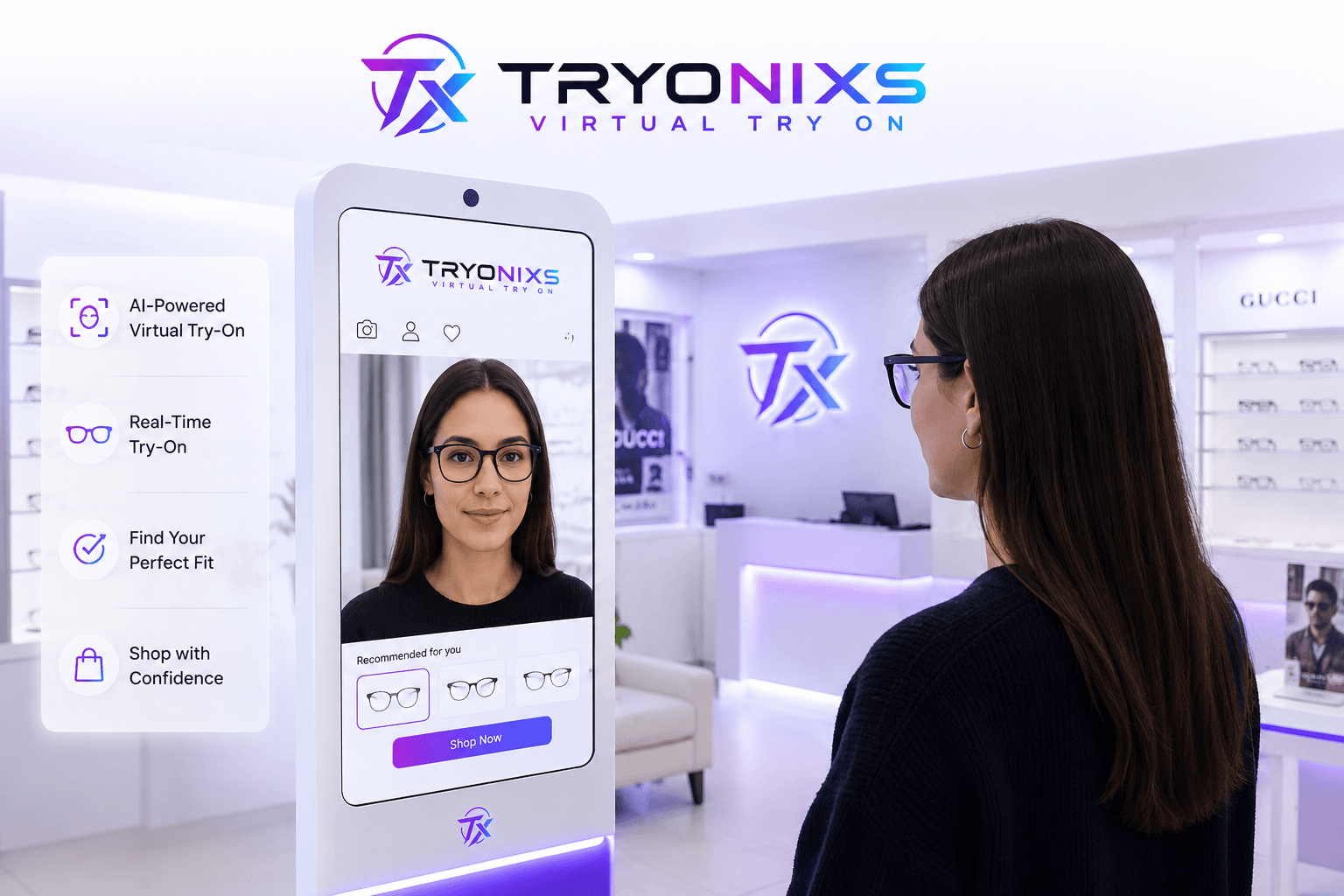
Virtual mirrors aren't only a website thing. Plenty of optical chains are installing the same tech in physical stores too, sometimes to speed up fittings, sometimes so a customer can try a color or style that particular location doesn't stock.
If you're running physical and online storefronts together, you really want one shared catalog and one rendering engine behind both, not two systems that don't talk to each other — especially as a multi-location retailer trying to keep every branch consistent.
What This Actually Costs
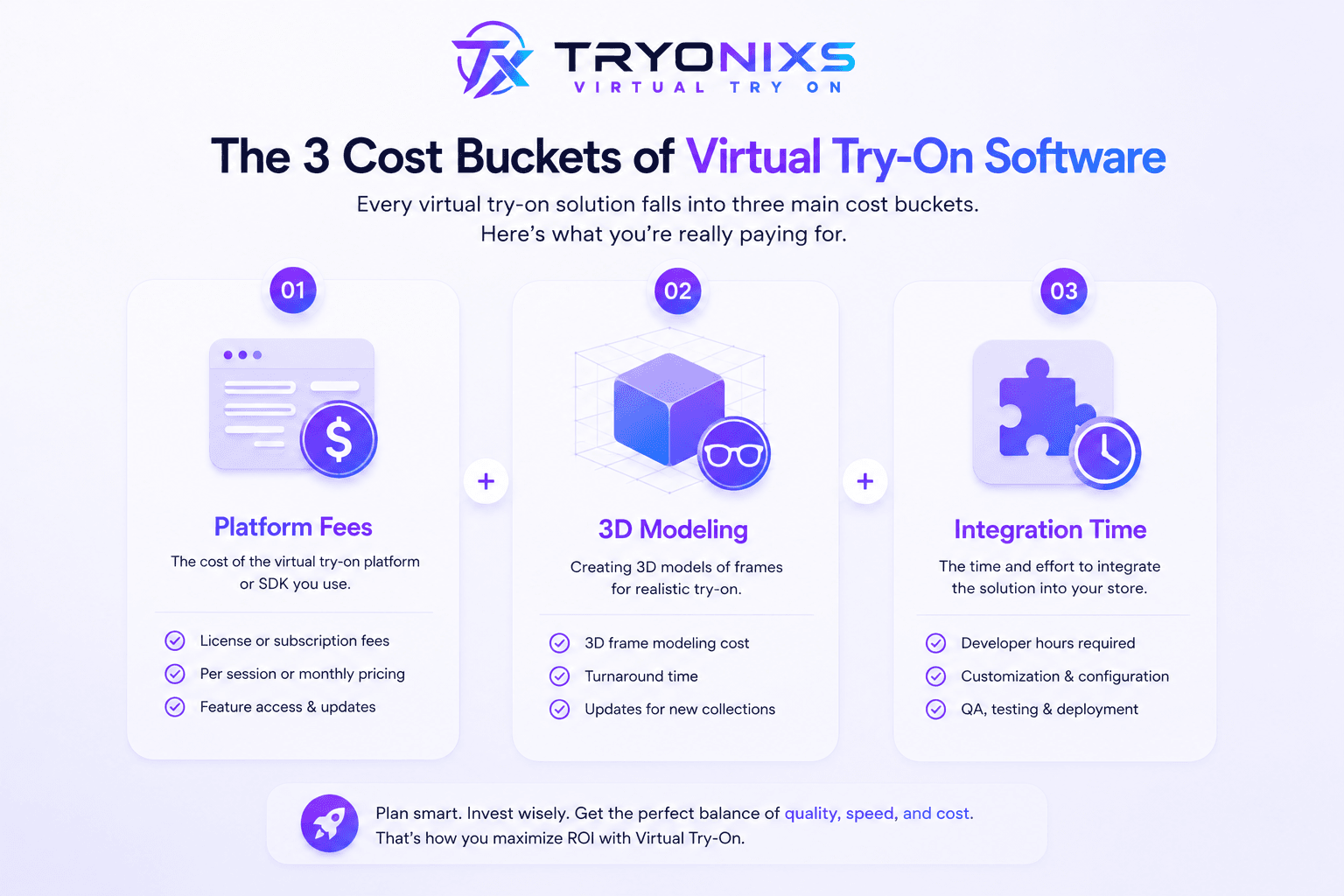
Roughly three buckets here. Platform or subscription fees, and most vendors charge by monthly active try-ons or SKU count rather than a flat number. 3D modeling of your catalog, usually one-time or per-SKU, and only if you're going the 3D route instead of 2D overlay. And integration time, which is how long it takes your dev team, or the vendor's, to actually get this live on your product pages.
That last one swings a lot depending on whether you're on Shopify, headless, or something custom — worth getting a real implementation timeline from any vendor before you commit, rather than assuming every platform bolts on the same way.
What It Does for Average Order Value
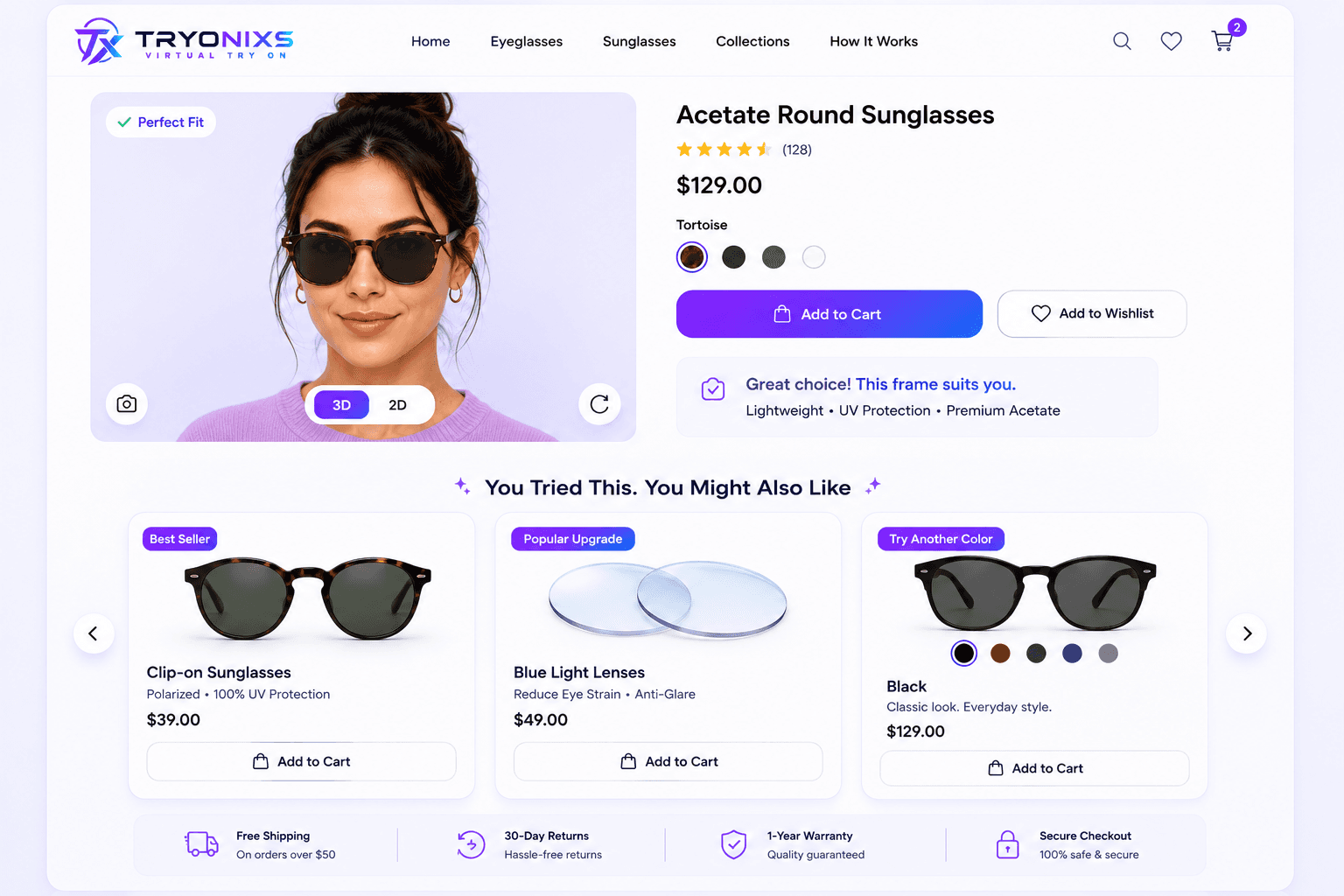
Once someone's actually engaged with a try-on tool, that's one of the highest-intent upsell windows in your entire funnel. You tried these on, people who liked this frame also grabbed the clip-on sunglasses, the blue-light upgrade, or a second color.
Brands that treat that try-on moment as a merchandising opportunity, not just a returns fix, tend to see it pull weight on average order value too.
The Data Side Is Basically a Free Product Roadmap
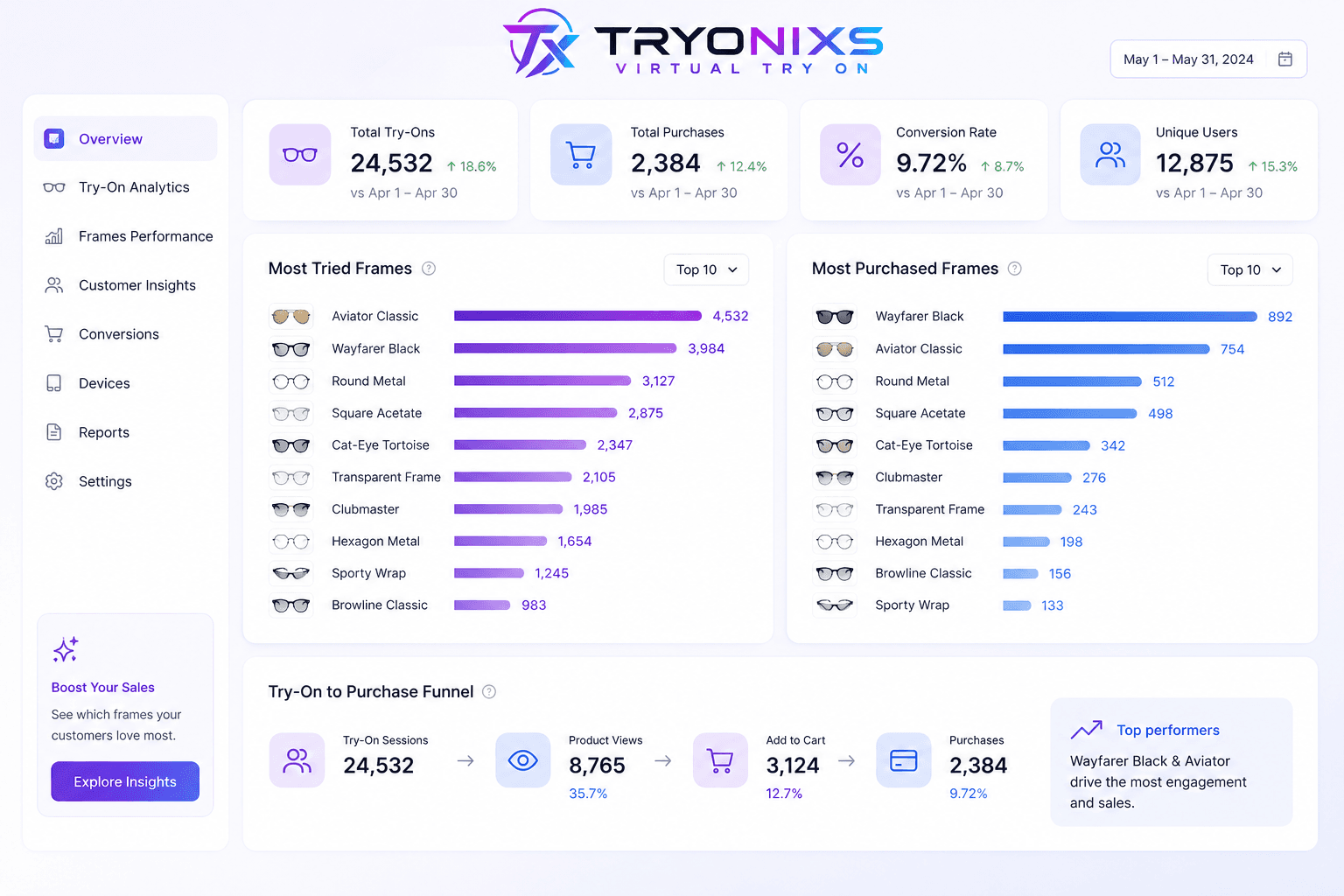
Every try-on session throws off data most eyewear brands never had before. Which frames get tried the most. Which get tried but never bought. Which colors people swap away from almost instantly.
That's not a marketing footnote, that's a live signal for what to reorder, what to quietly kill, and what deserves the homepage.
A Quick Word on Privacy

Face mapping touches biometric-adjacent data, and depending where your customers are, that comes with actual compliance requirements — GDPR in the EU and UK being the strictest version.
This isn't something to sort out after a complaint shows up in your inbox. Handle it before launch, and get clear, documented answers from any vendor about how face data is processed, stored, and whether it's retained after the session ends.
A Note on Kids' Eyewear
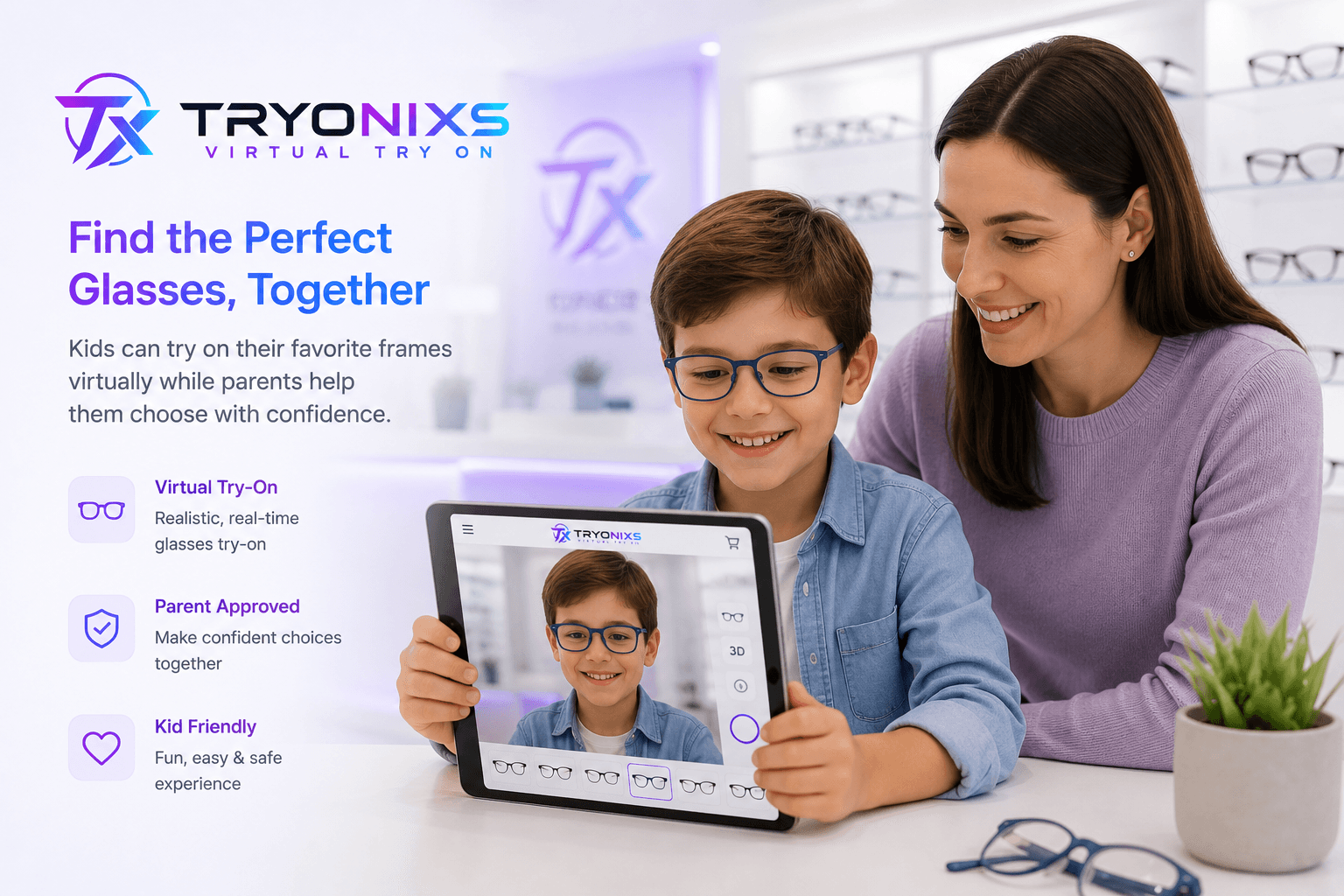
Try-on for children's glasses isn't just a smaller version of the adult experience. Sizing tolerances are tighter, there are safety questions around frame materials, and how you handle a child's face data, or whether you should collect it at all, needs its own answer, separate from the adult use case.
So, How Do You Actually Pick a Platform?
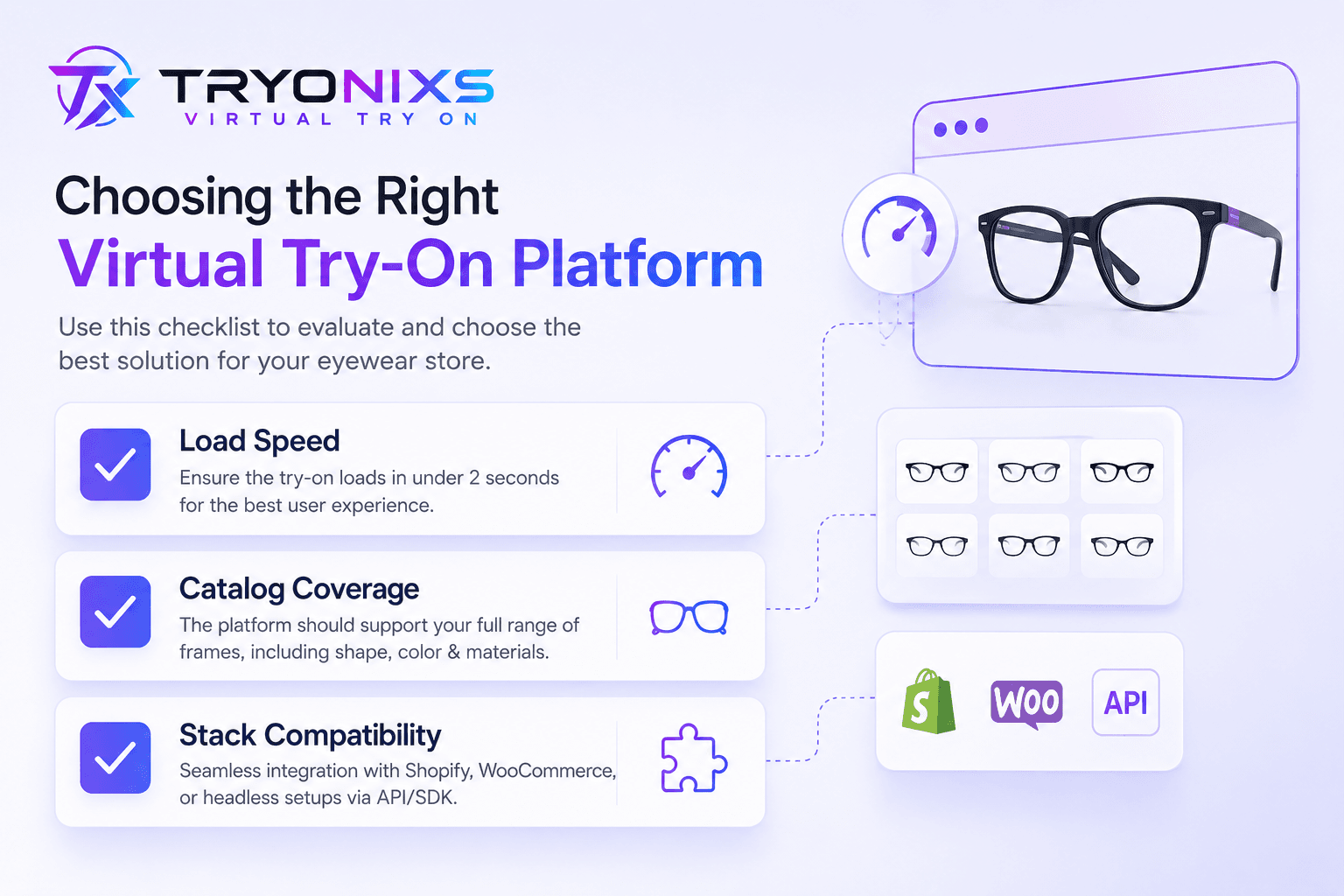
Most buying guides in this space lean on feature checklists, which honestly isn't that useful. The better question is what the platform does on the specific pages where your customers actually decide to buy.
That means testing load speed on your real product pages, not the vendor's polished demo. It means checking it against every frame shape in your catalog, not just the one they showed you in the pitch. And it means making sure it actually plays nice with your stack — Shopify, WooCommerce, or headless.
Where Tryonixs Fits Into This
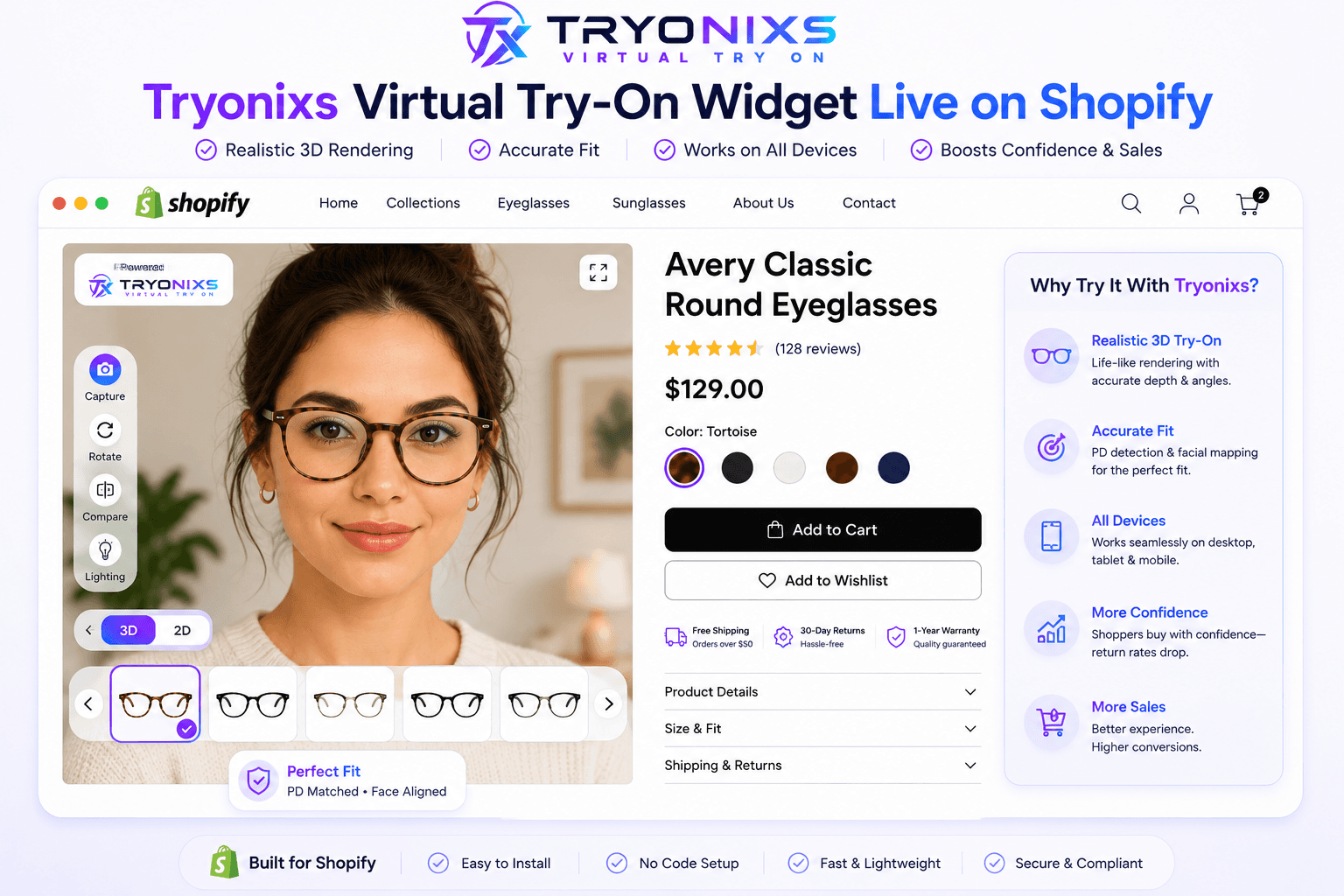
Tryonixs was built for exactly this problem: AI-powered virtual try-on for eyewear, beauty, and fashion retailers, with native Shopify integration and an AR SDK for stores that want more control over the experience.
Whether you're weighing building this in-house, bolting on a generic AR plugin, or going with something purpose-built for eyewear, it's worth comparing Tryonixs against whatever else is on your shortlist before you commit either way.
Frequently asked questions
- What is virtual try-on software for eyewear?
- It's a tool that lets a shopper see how a pair of glasses looks on their own face, live, through a phone camera or webcam, before they buy. It uses facial landmark tracking and a 3D or 2D rendering of the frame to show fit, size, and style in real time.
- How accurate is virtual try-on for glasses?
- It depends on the platform. Tools that only do a visual overlay are fine for style and rough fit, but they don't account for prescription-specific measurements like pupillary distance or bridge width. If accuracy for actual lens fitting matters, look for a platform that combines the visual try-on with real measurement data, not just a good-looking render.
- Does virtual try-on actually reduce returns?
- Yes, generally, because the biggest driver of eyewear returns is a frame that doesn't fit or suit the customer's face the way they expected from a flat photo. Letting them preview that before checkout catches a lot of those mismatches upfront. The exact percentage varies by store and catalog, which is why it's worth tracking your own before-and-after numbers rather than relying on industry averages alone.
- What's the difference between 2D and 3D virtual try-on?
- 2D overlay places a flat image of the frame over a photo or video of the face. It's cheaper and quicker to set up but looks off once the head turns. 3D rendering uses an actual 3D model of the frame and tracks it properly against the face, so it holds up through head movement and different angles, at the cost of needing a 3D model built for every SKU.
- Can virtual try-on work with prescription glasses, not just sunglasses?
- Yes, but this is where the platform choice really matters. Prescription eyewear needs accurate PD and fit data behind the visual, not just a nice-looking overlay. A basic AR plugin built mainly for sunglasses or fashion frames may not handle this well.
- Does virtual try-on work on mobile browsers, or does it need an app?
- Most modern virtual try-on tools run directly in the mobile browser through the camera, no app download required. That's actually one of the bigger selling points, since asking a shopper to install an app before they've even decided to buy tends to kill conversion rather than help it.
- Is virtual try-on compatible with Shopify and WooCommerce?
- Most established platforms support Shopify natively, and many also support WooCommerce or headless setups. Integration time varies depending on your stack, so it's worth confirming compatibility and setup time with a vendor before committing, rather than assuming compatible means quick.
- What does virtual try-on software typically cost?
- Costs usually break into platform or subscription fees, often based on monthly active try-ons or SKU count, 3D modeling of your catalog if you're going the 3D route, and integration time to get it live on your product pages. Pricing varies a lot by vendor and catalog size, so it's worth getting a quote against your actual SKU count rather than a generic rate card.
- Is customer face data collected during virtual try-on safe and private?
- Reputable platforms process facial tracking data in a way that's designed to be privacy-compliant, and depending on where your customers are located, this can fall under regulations like GDPR. It's worth confirming directly with any vendor how face data is stored, processed, and whether it's retained after the session ends, rather than assuming.
- Can virtual try-on help with kids' eyewear?
- Yes, though it needs different handling than the adult version — tighter sizing tolerances, safety considerations around frame materials, and clearer rules around whether and how a child's face data is collected at all.
- Is virtual try-on worth it for a small independent eyewear store, or just for big brands?
- It's increasingly relevant for smaller stores too, especially since the biggest problem it solves — returns from bad fit, and shoppers hesitating without a mirror — hits small stores just as hard, often harder, since they can't absorb return costs as easily as a large retailer. The main question for a smaller store is cost versus catalog size, not whether the technology is too advanced for them.
Launch AI Virtual Try-On on your store in minutes
Start with the free Tryonixs Starter plan — upload up to 15 products, run unlimited virtual try-ons, and integrate with Shopify, WooCommerce, or any custom storefront.
Frequently asked questions
What is virtual try-on software for eyewear?
It's a tool that lets a shopper see how a pair of glasses looks on their own face, live, through a phone camera or webcam, before they buy. It uses facial landmark tracking and a 3D or 2D rendering of the frame to show fit, size, and style in real time.
How accurate is virtual try-on for glasses?
It depends on the platform. Tools that only do a visual overlay are fine for style and rough fit, but they don't account for prescription-specific measurements like pupillary distance or bridge width. If accuracy for actual lens fitting matters, look for a platform that combines the visual try-on with real measurement data, not just a good-looking render.
Does virtual try-on actually reduce returns?
Yes, generally, because the biggest driver of eyewear returns is a frame that doesn't fit or suit the customer's face the way they expected from a flat photo. Letting them preview that before checkout catches a lot of those mismatches upfront. The exact percentage varies by store and catalog, which is why it's worth tracking your own before-and-after numbers rather than relying on industry averages alone.
What's the difference between 2D and 3D virtual try-on?
2D overlay places a flat image of the frame over a photo or video of the face. It's cheaper and quicker to set up but looks off once the head turns. 3D rendering uses an actual 3D model of the frame and tracks it properly against the face, so it holds up through head movement and different angles, at the cost of needing a 3D model built for every SKU.
Can virtual try-on work with prescription glasses, not just sunglasses?
Yes, but this is where the platform choice really matters. Prescription eyewear needs accurate PD and fit data behind the visual, not just a nice-looking overlay. A basic AR plugin built mainly for sunglasses or fashion frames may not handle this well.
Does virtual try-on work on mobile browsers, or does it need an app?
Most modern virtual try-on tools run directly in the mobile browser through the camera, no app download required. That's actually one of the bigger selling points, since asking a shopper to install an app before they've even decided to buy tends to kill conversion rather than help it.
Is virtual try-on compatible with Shopify and WooCommerce?
Most established platforms support Shopify natively, and many also support WooCommerce or headless setups. Integration time varies depending on your stack, so it's worth confirming compatibility and setup time with a vendor before committing, rather than assuming compatible means quick.
What does virtual try-on software typically cost?
Costs usually break into platform or subscription fees, often based on monthly active try-ons or SKU count, 3D modeling of your catalog if you're going the 3D route, and integration time to get it live on your product pages. Pricing varies a lot by vendor and catalog size, so it's worth getting a quote against your actual SKU count rather than a generic rate card.
Is customer face data collected during virtual try-on safe and private?
Reputable platforms process facial tracking data in a way that's designed to be privacy-compliant, and depending on where your customers are located, this can fall under regulations like GDPR. It's worth confirming directly with any vendor how face data is stored, processed, and whether it's retained after the session ends, rather than assuming.
Can virtual try-on help with kids' eyewear?
Yes, though it needs different handling than the adult version — tighter sizing tolerances, safety considerations around frame materials, and clearer rules around whether and how a child's face data is collected at all.
Is virtual try-on worth it for a small independent eyewear store, or just for big brands?
It's increasingly relevant for smaller stores too, especially since the biggest problem it solves — returns from bad fit, and shoppers hesitating without a mirror — hits small stores just as hard, often harder, since they can't absorb return costs as easily as a large retailer. The main question for a smaller store is cost versus catalog size, not whether the technology is too advanced for them.
Follow Tryonixs
Connect with Tryonixs on social media for AR virtual try-on updates, product launches, and eyewear technology insights.
Ready to add virtual try-on to your store?
Start free with Tryonixs — 15 products, unlimited try-on sessions, Shopify and WooCommerce integrations included.